Why Nurse Practitioners are key to solving the Ontario Primary Care Crisis.
Ontario’s population is growing, aging, and dealing with more chronic illness than ever before. Even with more doctors, the math simply doesn’t add up: there aren’t enough primary healthcare physicians to meet the demand.
We know the stats here in Gravenhurst: 50% of our residents are lacking access to a family doctor. So it’s off to Bracebridge or Orillia where their emergency rooms are filling up with people who simply have nowhere else to go. Ontario is in the middle of a primary care crisis, and it’s affecting families in our town.
Most people assume the solution is simple: train more doctors, and yes, we absolutely need family physicians, but even if Ontario doubled medical school seats tomorrow, it wouldn’t fix the problem fast enough. The truth is, our system needs more than doctors alone. It needs a stronger, more flexible team, and nurse practitioners (NPs) are one of the most powerful tools we already have.
What is a Nurse Practitioner?
A Nurse Practitioner (NP) is a registered nurse with advanced university education who provides personalized, quality health care to patients. Ontario Nurse Practitioners provide a full range of health care services to individuals, families and communities in a variety of settings including hospitals and community based clinics in cities and smaller towns in Ontario.
What Exactly Does a Nurse Practitioner Do?
While many people believe Nurse Practitioners (NPs) are relatively new to the Ontario health care scene, they have been providing exemplary care to patients for over 40 years and this year marks the fortieth anniversary of the Nurse Practitioners’ Association of Ontario (NPAO). Using the model of the NP as a physician replacement, the role of the NP in Ontario was established in the 1970s to expand the scope of practice of Registered Nurses to provide care in remote and under-serviced communities, as well as in pediatric intensive care units.
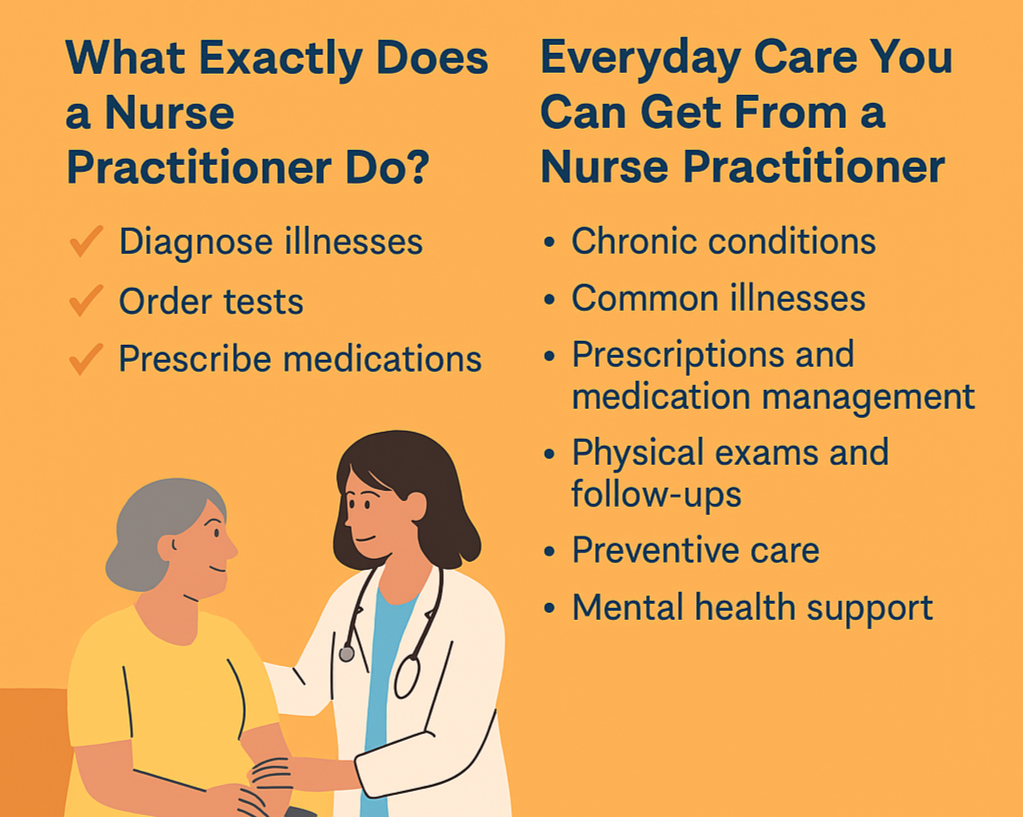
A nurse practitioner is a highly trained health professional who can diagnose illnesses, order tests, prescribe medications, and manage ongoing health conditions. They’re not “assistants” or “junior doctors,” they’re independent primary care providers with advanced clinical training.
Nurse Practitioners assess, diagnose, treat and monitor a wide range of health problems using an evidence based approach to their practice. They consult and collaborate with physicians and other health care professionals to meet the needs of the patient population. Chronic disease management, health promotion and illness prevention, as well as helping patients navigate through the health care system are integral to their approach to patient care. In addition, Nurse Practitioners are experts in community health care needs assessment and program planning, implementation and evaluation.
Everyday Care You Can Get From a Nurse Practitioner
Nurse practitioners can independently manage a wide range of medical needs, including:
Chronic conditions like diabetes, high blood pressure, asthma, and COPD
Common illnesses such as infections, rashes, earaches, and sore throats
Prescriptions and medication management
Physical exams and follow‑ups
Preventive care including immunizations, cancer screening, and sexual health services
Mental health support for anxiety, depression, and stress‑related concerns
For most people, these are the services they rely on most often, and NPs can deliver them without requiring a doctor’s sign‑off.
Why NPs Are Essential to Fixing the Crisis
Nurse practitioners help close that gap by expanding access to timely, high‑quality care. In many communities, NP‑led clinics allow people to get same‑week or even same‑day appointments. They spend time with patients, focus on education and prevention, and help people navigate the health system so they don’t end up in the ER for issues that could have been managed earlier.
A More Accessible, Human‑Centred Future
If Ontario wants a primary care system that actually works, it needs to fully embrace nurse practitioners, not as a backup plan, but as core providers. When NPs, doctors, nurses, and other professionals work together, communities get faster access, better continuity, and compassionate care.
For our community, the difference in connecting residents without access to primary healthcare will depend on bringing in a mix of new family physicians and nurse practitioners.


2026 is looking great for the residents of Gravenhurst as we close the gap to health care for all.